
Work IQ
The best place to use AI is between two jobs
Most teams aim AI at faster work inside one role. The bigger win is the handoff where one person's output becomes someone else's input.
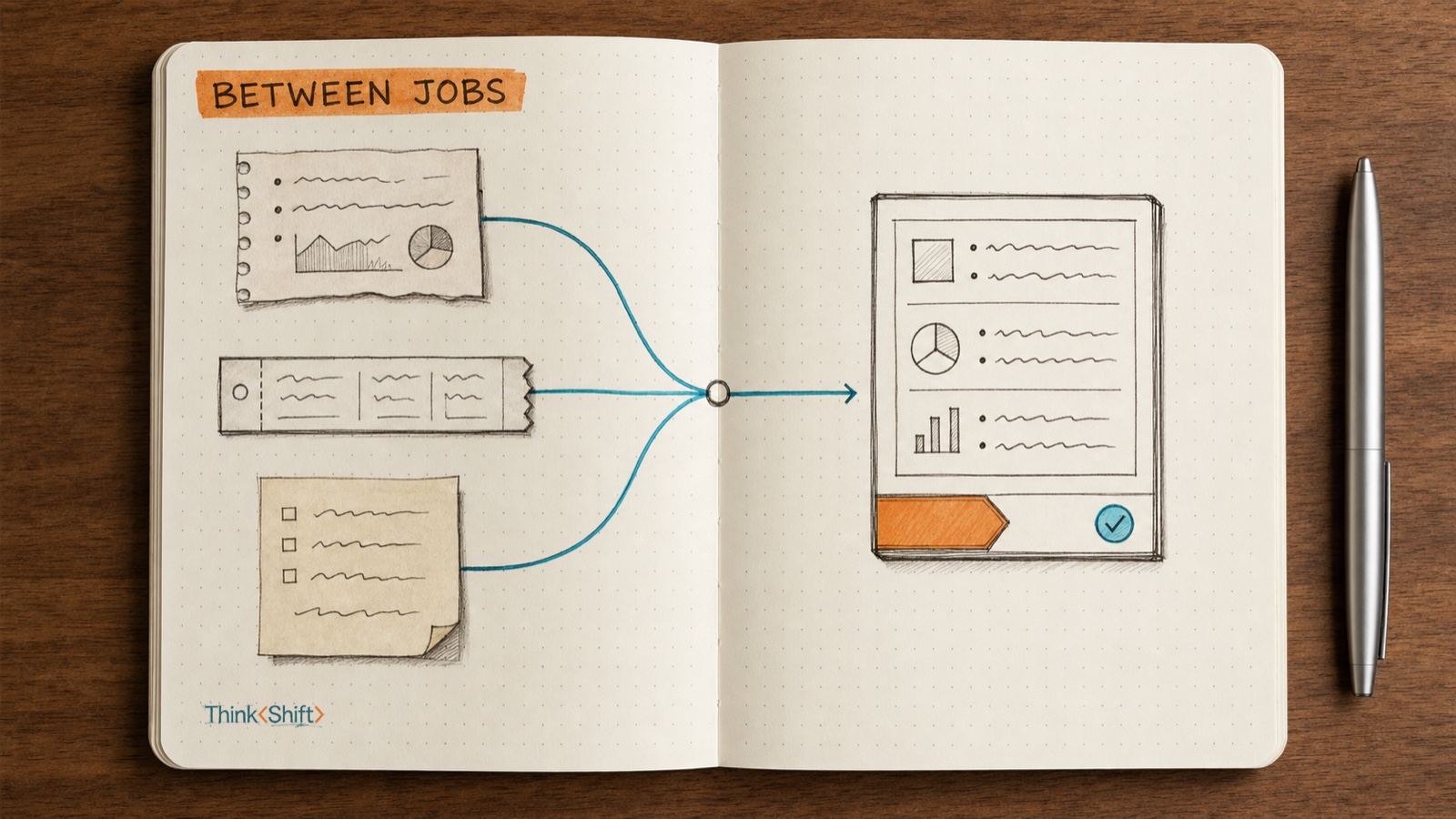
The move Before you build Monday's brief by hand, give AI every team's input in one prompt and ask for one page organized around the decision. Translate the formats, don't summarize them.
The short version: Most teams use AI for faster work inside one role. The bigger win is at the handoff between roles, where one person's output has to become someone else's input. The cross-role brief translator prompt turns three formats into one page the reader can act on.
It's Monday. You have a Slack thread from sales, a ticket digest from support, and three bullet points from your VP. All of it needs to be one brief by 10 a.m.
Nobody's information is wrong. It's just in three different languages. Sales talks pipeline. Support talks churn risk. Your VP wants a number and a next step. You're the one who makes those three conversations one page.
Most teams point AI at speed inside a single role: faster drafts, quicker replies. That's fine. But you could speed up every person in that chain and still lose an hour to the translation step in the middle. The costliest work lives at the handoff where one person's output has to become someone else's input, and neither format fits.
The seam between two roles is where AI earns its keep.
That's where context gets lost, rework piles up, and the same fact gets rewritten three times before anyone acts on it. AI handles it well because it doesn't care that sales wrote in bullets, support wrote in ticket shorthand, and your VP wrote in a reply-all. Hand it all three and it gives back one page organized around the decision.
The move
Next time you're stitching inputs from different people or teams, don't summarize them. Translate.
I have inputs from [number] different people or teams.
Here is each one, labeled by source:

[Paste each input, labeled: "From Sales:", "From Support:", etc.]

Write a single one-page brief for [who reads it: my VP / the leadership team / the client].
Answer these five questions:
1. What's the situation, in one paragraph?
2. What needs deciding?
3. What do the sources agree on?
4. Where do they conflict or leave a gap?
5. What's the recommended next step?

Use plain language. No jargon from any single source.
Two things make it work. The source labels give AI the context it needs to translate, not just merge. And the five questions force it to organize around the decision instead of parroting each input back.
Filled in, it looks like this
I have inputs from 3 different teams. Here is each one:

From Sales: "Pipeline is up 18% QoQ but two enterprise deals slipped to Q4.
Forecast needs adjusting."
From Support: "Ticket volume on the onboarding flow doubled last sprint. Three
accounts flagged churn risk."
From VP (reply-all): "Where are we on Q3? Need the update before Tuesday's
sync."

Write a single one-page brief for my VP and the leadership team.
Answer these five questions:
1. What's the situation, in one paragraph?
2. What needs deciding?
3. What do the sources agree on?
4. Where do they conflict or leave a gap?
5. What's the recommended next step?

Use plain language. No jargon from any single source.
The brief it drafts:
Situation: Pipeline grew 18% QoQ, but two enterprise deals slipped to Q4 and onboarding ticket volume doubled. Growth is real but fragile.
Decision needed: Adjust the Q3 forecast now and decide whether slipped deals or the onboarding fix get priority this sprint.
Agreement: Revenue momentum is real across both sales and support data.
Conflict: Sales reads the slip as a timing issue (deals pushed, not lost). Support reads the ticket spike as a product issue (onboarding is breaking). Different fixes.
Next step: Align on root cause before Tuesday's sync. If the ticket spike is causing churn, the onboarding fix outranks the forecast revision.
Why this helps
You handed in three formats and got back one page in the reader's language. Forty-five minutes of Monday, back.
What stays yours
AI translates the format. It doesn't know which deal is worth saving, which churn risk is a real fire, or what your VP actually cares about this quarter. The judgment after the brief is the job.
Try it this week
Pick one recurring task where you combine inputs from more than one person. Run this prompt once. The expensive part was never your job or theirs. It was the gap in between.