Meeting Edge
How will they read this?
Don't ask AI if your email is good. Make it read the message as the person getting it, then name the line that lands wrong.
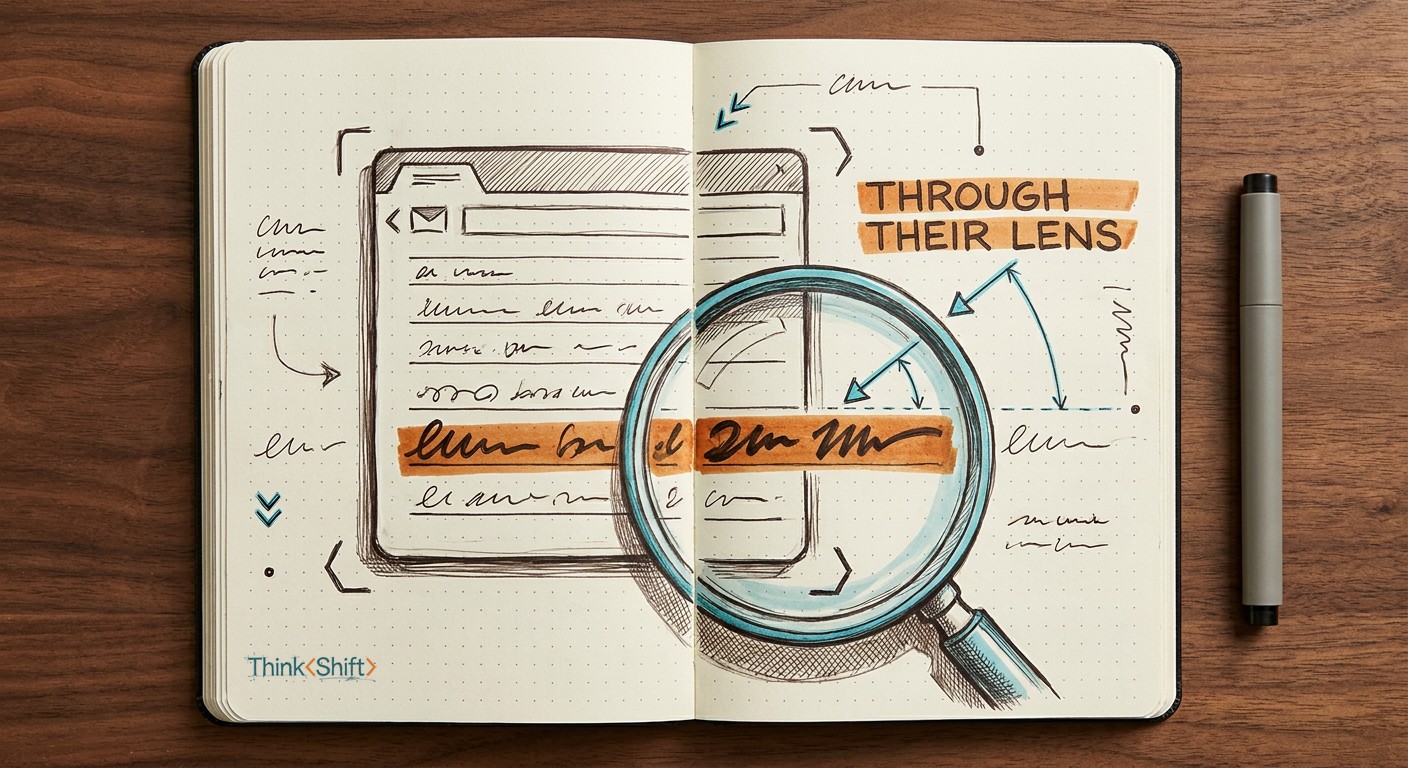
The move Before you send the tense message, tell AI to read it as the specific person getting it and name the one line most likely to land wrong. Don't let it rewrite. Fix that line in your own words.
The short version: Asking AI "is this good?" gets a yes and a polish. The move that protects you is to make it read the message as the specific person receiving it and name the one line that lands wrong. You're simulating the reader, the one thing you can't do from inside your own head. What to change stays yours.
You've written the hard one, the pushback or the no you reworded five times. You paste it into AI. "Is this good?" It says yes, smooths a few edges, hands it back. You hit send. Two days later the reply comes back cold, or defensive, or a whole paragraph clarifying something you never thought was unclear.
"Is this good" is the wrong question.
Why "make it better" fails you
The right question is about the reader, not the writing. "Is this good?" and "make it better" are requests to polish. AI obliges: cleaner grammar, warmer tone, a note that it reads great. Neither of you checked the only thing that matters: how it lands on the one person receiving it.
That part you can't feel yourself. You wrote it knowing what you meant, so you read your own intention into every line. The person on the other end reads only the words, through their own bad morning and their history with you. That gap is where the cold reply lives: the space between what you meant and what they'll hear.
You already know what you meant. The only thing that matters is what they'll hear.
Ask it to become your reader
So don't ask AI to grade your writing. Ask it to become your reader. Grab the draft and hand it over like this:
Read this as [the specific person: my boss's boss, a client who's already
annoyed, a peer I'm saying no to]. You are them, reading it on a busy morning.

Tell me: what's the one line most likely to land wrong, and how might they
misread it? Where might they feel talked down to, cornered, or brushed off?
Don't rewrite it. Just tell me how it hits.
Two things make it work: name the actual person and tell it not to rewrite. The second you let it rewrite, you're back to grading prose. Kept as a read, it does the thing you can't do from inside your own head. It plays the reader.
It hands you something specific, and a little uncomfortable in a useful way:
The line "as I already mentioned" reads as a jab. They'll hear "you weren't listening," and it puts them on the defensive for the rest of the email.
Closing a hard no with "let me know if you have questions" can feel like a door shut politely. There's no path forward in it.
Now you fix the one or two lines that actually matter, in your own words, before anyone sees them.
Why this helps
"Make it better" polishes the version you already wrote. "How will they read this" catches the misfire while it's still yours to fix and costs you thirty seconds. You still decide what to change and how to say it. You're just no longer the only person who read it before it went out.
The catch
It's a simulation, not a verdict. AI is guessing at one person from a few lines. It can be wrong, and it doesn't know the history you carry with them. Use it to surface the risk, then make the call yourself. The read of the room stays yours.