
Work IQ
The tasks living in your head are a single point of failure
When every next step lives in one head, every interruption becomes project risk.
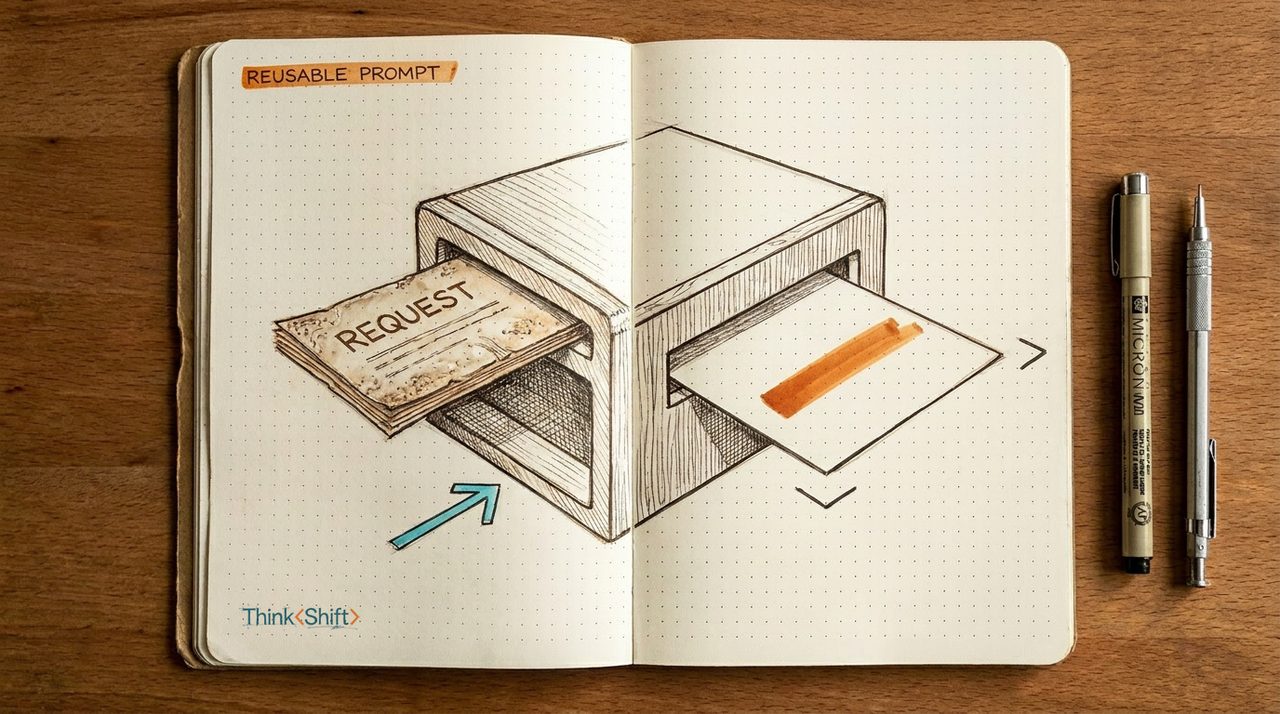
The move Put AI where the project lives so it holds context and surfaces loose ends.
The short version: If a project's next steps only live in your memory, the project runs on your recall, not on shared memory, and every interruption becomes risk. Put AI where the project lives: give it standing context once, and let it surface the loose ends before you have to remember to look. If the task lives in your head, it doesn't live anywhere.
The scene
It's 4:42 and you're the manager closing your laptop when three loose ends hit at once: the client question you meant to answer, the permit follow-up your report is waiting on, and the budget line nobody owns yet.
Tomorrow, those don't live in a system. They live in whether you remember them.
The trap
That can feel like being on top of things. It's the opposite. It means the project runs on your recall, not on shared memory.
When every next step lives in one head, every interruption becomes project risk. A packed afternoon, a sick day, one ugly fire drill, and something slips before anyone notices it's gone.
The shift
Put AI where the project lives, not where you occasionally go for help.
If the task lives in your head, it doesn't live anywhere.
Give it standing context once: the project, the owners, the deadlines, the open loops, the blockers. Then it can surface what's hanging before you have to remember to look.
Use this
Set up one active project as a living project brain:
Help me build a standing project brain I can reuse each week.

Project:
[what it is and what it's trying to get done]

People and roles:
[who's involved and what each person owns]

Deadlines and milestones:
[dates]

Open tasks and follow-ups:
[what's still moving]

Decisions already made:
[key choices already locked]

Risks or blockers:
[what could slip or stall]

Return:
1. A one-page project map
2. Open tasks by owner
3. What's blocked or unclear
4. What I should check before the next team sync
5. What's still missing if I want this to stay useful next week
Filled in, it looks like this:
Project:
Q3 office move for the Denver team, targeting a Sept 1 move-in.

People and roles:
Me (owner), Priya (facilities + vendor contracts), Marcus (IT cutover), Dana (staff comms).

Deadlines and milestones:
Lease signed Jul 15; furniture ordered Aug 1; IT cutover Aug 25; move Sept 1.

Open tasks and follow-ups:
Confirm the elevator reservation; Priya's waiting on the final vendor quote; staff FAQ still unwritten.

Decisions already made:
4th-floor layout; keeping the current internet provider.

Risks or blockers:
Furniture lead time is slipping; nobody owns parking-access setup.
Why this helps: next Friday starts from one current map of the work, not a scavenger hunt through your memory.
What stays human
AI can hold the list and point at the loose ends. You still own the priorities, the promises, and the hard conversation when someone's slipping.
Try it this week
Pick one project that currently lives in your memory. Spend fifteen minutes handing AI the standing context, then open that note before your next sync instead of starting from your head.