Meeting Edge
The 5-Minute Meeting Brief
Walk in with the decision, the risk, and one useful question instead of trying to catch up live.
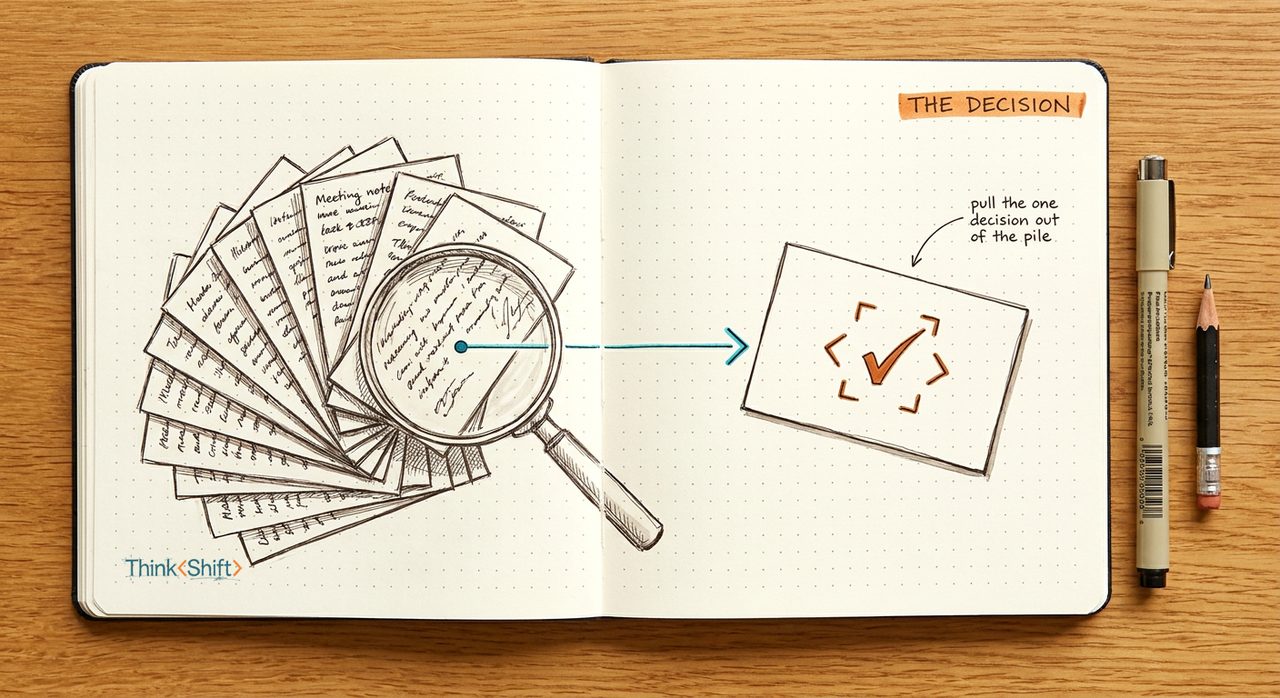
The move Give AI standing context to surface the decision, risk, and one sharp question before the room starts.
The hidden problem
The problem is not that you lack notes. The problem is that you are walking in without a point of view.
Most people skim and hope they can catch up live. That makes them informed enough to follow along, but not useful enough to move the room.
The smart reframe
Prepared does not mean knowing everything. Prepared means knowing the likely decision, the open risk, and one question that helps the group think better.
The goal is not to have AI summarize the meeting. The goal is to use AI to find the decision hiding inside the context.
Agenda skimmed. Thread half-read. Vague confidence. You wait for the meeting to reveal what matters.
One-page brief. Likely decision. Named risk. One question you can use without pretending to know more than you do.
Use this
I have five minutes before a meeting.

Context I can safely share:
[agenda, notes, thread summary, or rough memory]

Create a one-page meeting brief with:
1. The real purpose of the meeting
2. The likely decision
3. Three unresolved questions
4. Five smart questions I could ask
5. One recommended way I can contribute

If the context is thin, tell me what is missing before you answer.
What good looks like
Bad output sounds like a generic meeting summary:
The meeting is about the project timeline. Discuss blockers and next steps.
Good output gives you one thing you can say in the room:
It sounds like the decision is less about which option we like and more about which risk we are willing to own. Can we name that tradeoff before we choose?
Save it for next time
If this is a recurring meeting, do not start from zero next week. Save the meeting purpose, your role, common decisions, useful contribution standard, and private-context boundary as a reusable setup.
Watch out for
Do not paste confidential customer details, employee issues, legal material, or sensitive financials. Summarize those in your own words first.
Before the next meeting where you do not want to be the person catching up live, give yourself five minutes. Build the brief. Bring one better question.