Signal
AI is becoming part of the job
The tools your company runs already made the decision. The question left is which parts of your work benefit.
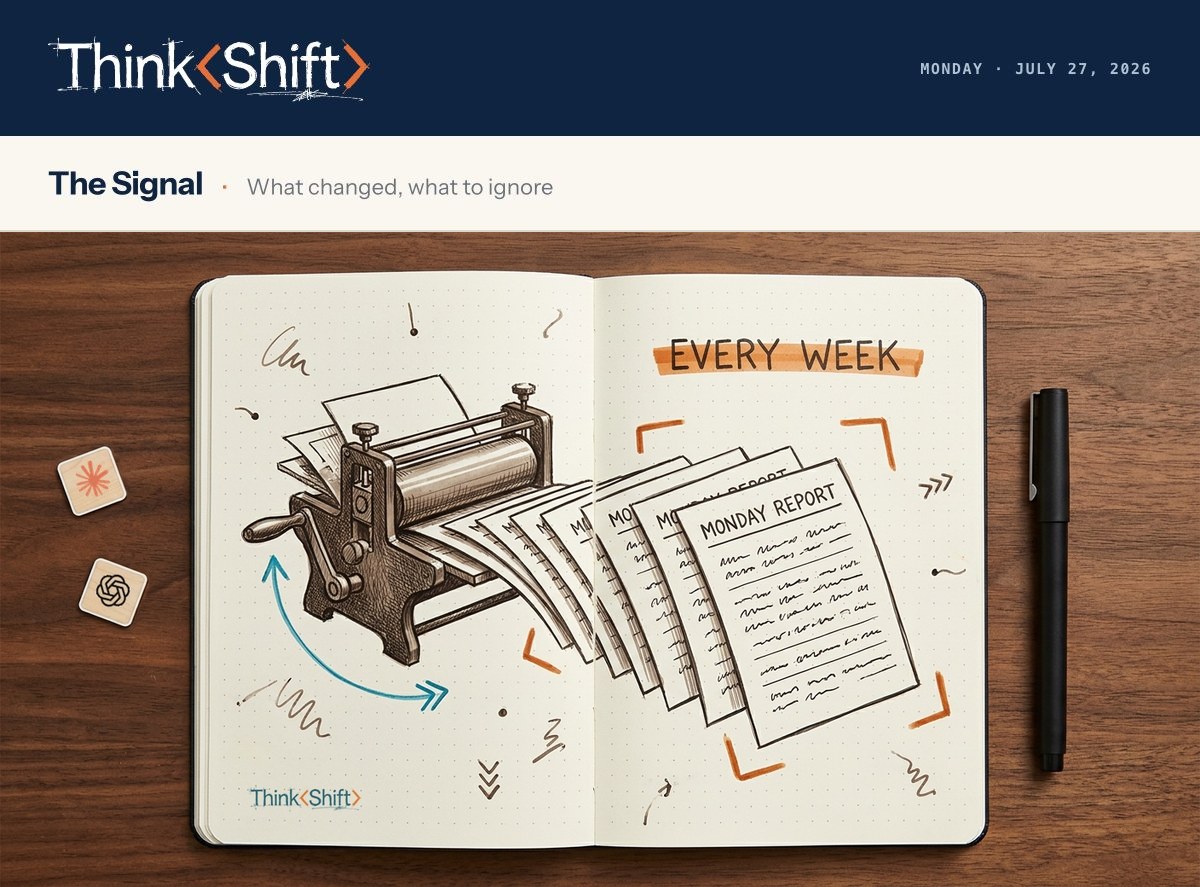
The move Sort your recurring tasks into three lanes: use freely, use then review, and keep yours. Five minutes of honest sorting before the defaults sort for you.
The short version: AI is already in your email, your project tool, and your coworker's deck. The useful question isn't whether to adopt it. It's which parts of your work AI genuinely improves and which parts still need to be yours.
Your email already suggests replies. Your project tool summarizes threads you haven't read. Last week someone's quarterly deck was half AI-drafted, and nobody mentioned it.
AI at work used to be something you opted into. Now it's a feature of the software your company already runs.
Most people are still deciding whether AI is worth trying. The tools already decided for them. The real question is narrower than "should I use AI?" It's this: which parts of my work does AI genuinely improve, and which parts still need to be mine?
AI didn't wait for you to decide. It shipped in a software update.
The move
Five minutes. Sort your recurring tasks into three lanes:
- Use freely. Routine first drafts, internal summaries, research starting points.
- Use, then review. Client-facing work, analysis with numbers, anything someone else relies on.
- Keep yours. Judgment calls, difficult conversations, decisions where the context lives in your head.
This isn't company policy. It's five minutes of thinking you'll be glad you did.
What to skip this week
The "AI is coming for your job" cycle. What's actually happening is less dramatic: AI is becoming a feature of the job you already have.
The updates keep shipping. Where you stand is still yours to sort out.