
Work IQ
Company knowledge is not a license to stop naming sources
More internal documents make AI sound sure. They don't make it right. Name which sources count before every task.
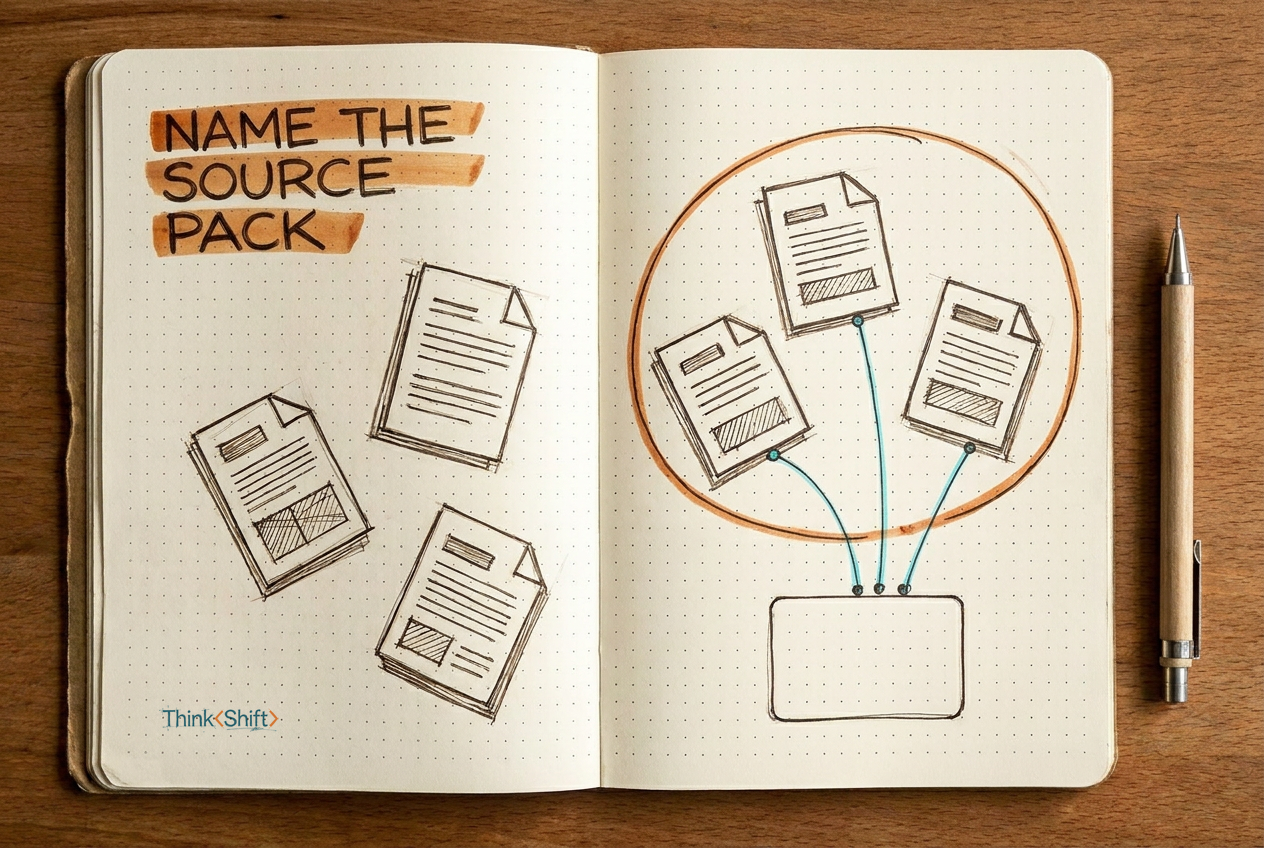
The move Before any task that draws on internal documents, name which ones to use, which to skip, and how old is too old. Two minutes of curation stops a stale number from reaching your client.
The short version: When your team uploads internal docs into AI, the model sounds more confident. But it treats every file equally, blending stale data with current data. Name the source pack before every task: which documents are in, which are out, and how fresh each one needs to be.
Priya's consulting team uploaded the firm's entire playbook library into their AI workspace last month. Pricing models, proposals, frameworks, client briefs. On Tuesday a sales lead asked AI to build a competitive analysis for a new pitch, and the draft came back fast, citing the firm's own numbers.
The pricing was eighteen months old. The client caught it before Priya did.
The trap is the opposite of what you'd expect
Nobody forgot to supply context. The opposite happened. The team gave AI everything, and the model treated a stale pricing sheet the same as last quarter's update. It retrieved both, blended them, and sounded equally sure about each.
That's the trap with company knowledge features. More access looks like more reliability. It isn't.
More documents don't mean better answers. They mean more places for a wrong answer to hide.
Name the source pack
When your company's documents live inside the AI's reach, your job changes. You're no longer supplying context by pasting it into a chat. You're deciding which context counts. That means knowing which version of the pricing model is live, which playbook was retired, and which client brief is too old to trust.
Before any task that draws on internal documents, tell the model which ones to use, which to ignore, and how old is too old.
You have access to our internal documents. For this task, use ONLY
the following sources:

- [document name, version, last updated date]
- [document name, version, last updated date]

DO NOT reference:
- [document or category to exclude]

Before using any figure, date, or policy from these documents,
note which document it came from and when that document was last
updated. If any source is older than [freshness window, e.g.,
90 days], flag it and ask me to confirm it is still current
before you include it.
Two things make this easier to check. The exclusion list states the boundary in plain language. The freshness flag gives the model a clear reason to pause before using anything past its sell-by date.
Filled in, it looks like this:
You have access to our internal documents. For this task, use ONLY:

- 2026 Q2 Pricing Model (v3.1, updated June 15, 2026)
- Enterprise Onboarding Playbook (v2, updated May 2026)

DO NOT reference:
- Any pricing document from before 2026
- The 2024 competitive landscape PDF

Before using any figure, date, or policy, note which document
it came from and its last-updated date. If any source is older
than 90 days, flag it and ask me to confirm before including it.
Here is what a useful response should look like:
Sources used:
• 2026 Q2 Pricing Model (v3.1, June 15, 2026): current
• Enterprise Onboarding Playbook (v2, May 2026): ⚠️ 97 days old, past your 90-day window
The onboarding playbook is past your freshness threshold. Should I proceed with its figures, or would you like to confirm it is still current?
Why this helps
The source pack makes the allowed documents and freshness window visible in the response. You can check what the model used before a stale number reaches your client.
The catch
AI can retrieve from your documents. It cannot tell you whether the version in the system is the latest one. Freshness is yours to know.
Try it this week: Before your next task that pulls from internal docs, spend two minutes listing which documents should be in and which should be out. That list is the source pack. It takes less time than explaining the wrong number to a client.