
Workarounds
Give AI a job, not a question
Generic output isn't the model's ceiling. It's the ceiling of what you asked.
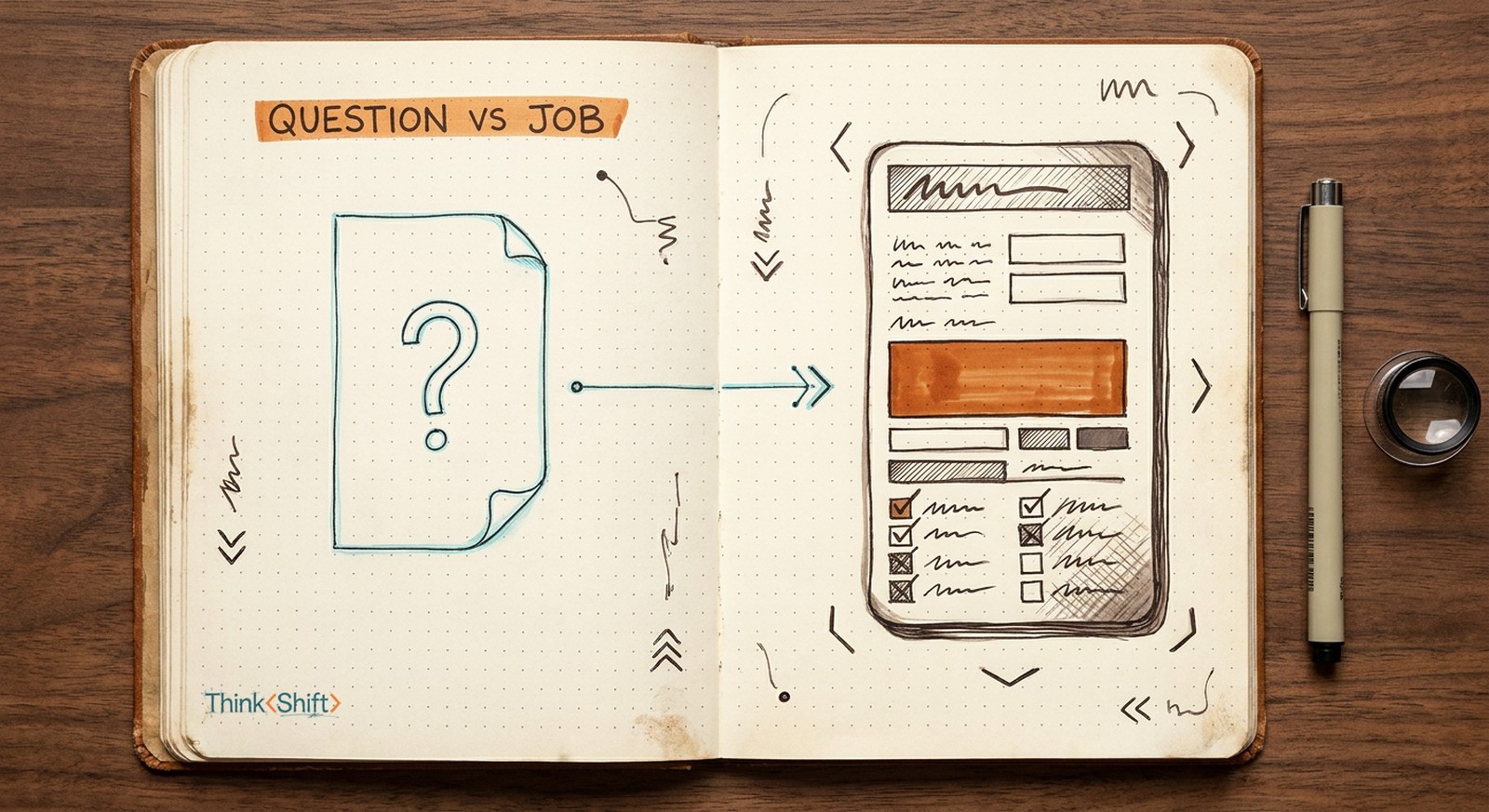
The move Brief AI like a capable new hire: hand it a job (outcome, standard, your context, and what stays yours), not a question.
The short version: Generic output isn't the model's ceiling, it's the ceiling of what you asked. A question gets you the average of the internet. The people getting real work out of AI aren't writing better prompts, they're handing it a job the way you'd brief a capable new hire: the outcome, what good looks like, the context only you have, and what stays yours to decide. A question gets you an answer. A job gets you work you can use.
The scene
You had a real task, so you opened AI and asked it a question. Something like "what's a good subject line for a re-engagement email?" Back came five subject lines, all perfectly fine, and not one you'd actually send.
So you closed the tab and did it yourself. And somewhere in there a verdict settled in: this thing is fine for simple stuff, but not really built for my work.
The trap
You took the most capable assistant you've ever had and asked a trivia question.
With almost nothing to go on, AI gave you the safest answer it could: the average of every re-engagement email on the internet. It was generic because the ask was: no outcome, no standard, none of your context. That blandness wasn't the model showing you its ceiling. It was the model showing you the ceiling of the question.
The shift
So the usual fix is "get better at prompting," and people hunt for the magic wording. That's the wrong level.
The shift isn't a sharper question. It's refusing to ask a question at all, and handing over a job instead. A job carries the four things your question left out:
- the outcome you want
- what good looks like
- the context only you have
- what stays yours to decide
The first three are just being specific. That fourth one is what turns asking into delegating.
It's the difference between asking a new hire "what's a good subject line?" and handing them the campaign, the list, the last three, and saying: draft five, tell me which you'd pick, and why.
A question gets you an answer. A job gets you work you can use.
The move
Next time you reach for AI on real work, brief it like the hire:
Here's a job, not a question.

Outcome: [what I need to walk away with]
What good looks like: [an example, a constraint, the bar it has to clear]
What only I know: [the context, the history, my actual situation]
Yours to draft, mine to decide: [what you handle vs. what I'll judge]

Do the work, then tell me where you were unsure.
Same task, briefed as a job: "Re-engagement email to people who bought once a year ago and went quiet. We're dry and a little self-deprecating, never hypey. Last three that worked are below. Draft five, rank them, flag the one you're least sure about." The result isn't five generic lines:
1, my pick: "You bought once, then ghosted us. Fair."
2: "A year later, still not spammy."
3: "Quick one, no pitch inside."
4: "Did we do something?"
5, least sure: "We miss you." Everyone sends this one and it says nothing.
Look what came with the list: a ranked pick, and the one line it doesn't trust, flagged. A question leaves you second-guessing alone. A job points you at the part worth checking.
Pro tip
To make the output even better, give the AI a role. For instance, if there's a specific expert in the relevant domain, name them (e.g. "You are David Ogilvy, advertising legend" or "Answer these as David Ogilvy would"). If no one comes to mind, just ask the AI to research the top voices in your field, then write as them. It's the same job, but more thoughtfully aimed through the lens of someone who spent a career getting it right:
Plain job: "A year later, still not spammy."
With an Ogilvy role: "The upgrade you're paying for and haven't opened."
No hype added. It just trades a dry aside about you for a specific thing the reader is missing.
What stays yours
One line to keep, though. A job still needs you to say what good looks like. Delegating the work was never the same as delegating the judgment. That part doesn't transfer. It's the part that's actually you.
Try it this week: one real task. Write the four lines before you open AI.