
Work IQ
Why your judgment is worth more now, not less
The ability you're afraid of losing was never your durable edge.
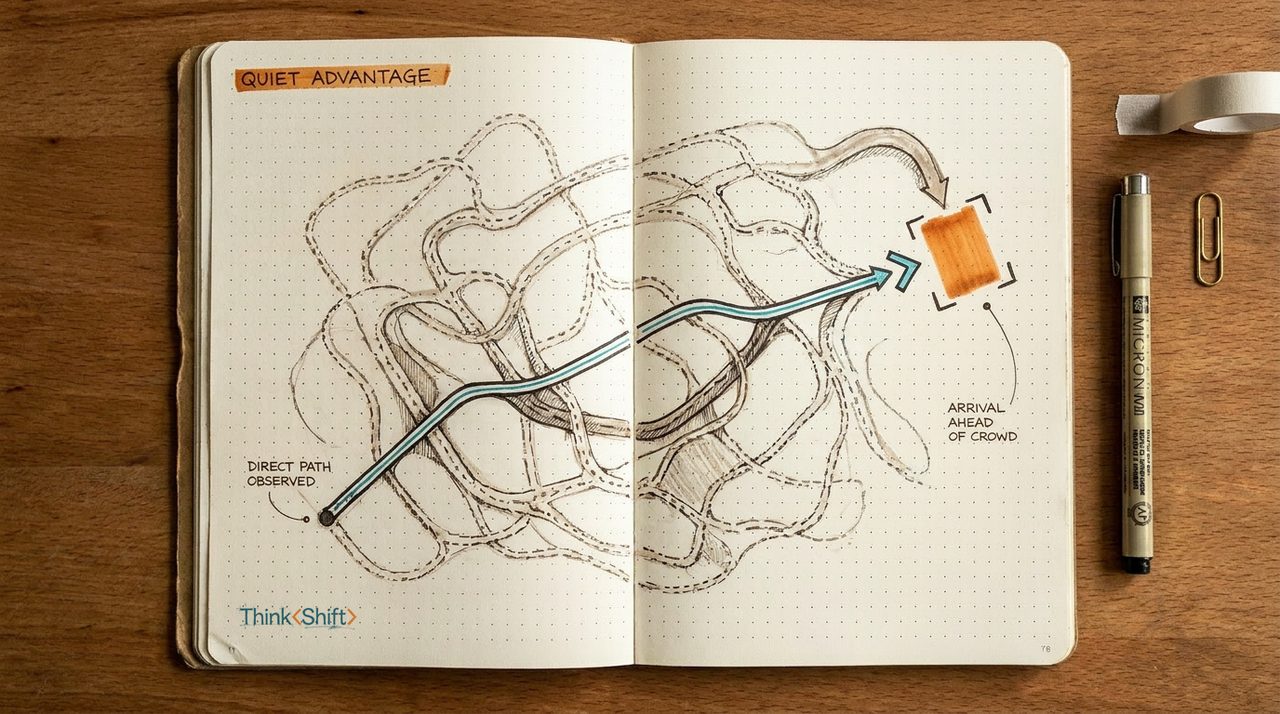
The move Form your own view first, then use AI as a sparring partner to sharpen it.
The short version: The ability you're afraid AI is dulling, raw mental speed, was never your durable edge. Pattern recognition is, and it grows every time you form your own read and check AI's answer instead of rubber-stamping it. The people who get dumber with AI are the ones who stopped forming a view of their own first. Raw speed peaks early. Judgment compounds.
The scene
You paste in the problem, AI hands back a clean answer, and you take it. It's a good answer. But a small voice asks: a year ago you'd have reasoned that out yourself. If AI does the thinking now, are you quietly making yourself dumber?
It's a fair worry. Most people just don't look at it closely enough to feel better.
The trap
The worry assumes your value was the fast reasoning, the raw horsepower to churn through a problem. And AI does have that in abundance. If that's the game, you lose.
But that horsepower was never your durable edge. Researchers split thinking in two: the fast, raw processing that peaks in your twenties, and the slower pattern recognition that comes from having seen a hundred situations like this one. The first fades for everyone. The second is the thing a client, a boss, or a team actually leans on you for. AI has the first. It cannot borrow the second, because it hasn't lived your last ten years of work.
The shift
Stop guarding the ability AI already beat you at. Grow the one it can't touch.
Raw speed peaks early. Judgment compounds.
Every time you read an AI answer, form your own view, and notice where the two differ, that's a rep. That's the pattern muscle getting stronger. The people who get dumber with AI aren't the ones who use it. They're the ones who stopped forming a view of their own first.
Use this
Turn AI from an answer machine into a sparring partner. Before you ask it, commit to your own read:
Before I show you the situation, I want to sharpen my own judgment, not skip it.

The situation:
[what's going on + the call you have to make]

My own read first:
[your 2-3 sentence take: what you'd do and why]

Now: where is my read strong, where is it thin, and what did I miss?
Filled in, the middle looks like this:
The situation:
A good employee asked for a raise we didn't budget for. I have to answer by Friday.

My own read first:
I'd say not now but name a real path to it, because losing them costs more than the raise. Risk is it sounds like a brush-off.
Why this helps: you get AI's second opinion and the rep of having thought first. Over months, that's the pattern-matching that keeps your judgment worth paying for.
What stays human
AI can stress-test your read. It can't own the call, and it can't build the experience. Only doing the reps does that.
Try it this week
Next time you'd normally just ask AI, write your own answer in one line first. Then ask. The gap between the two is where your judgment gets sharper.