
Work IQ
Your judgment is the appreciating asset
AI is raw horsepower, and it's basically free now. Here's the part that isn't.
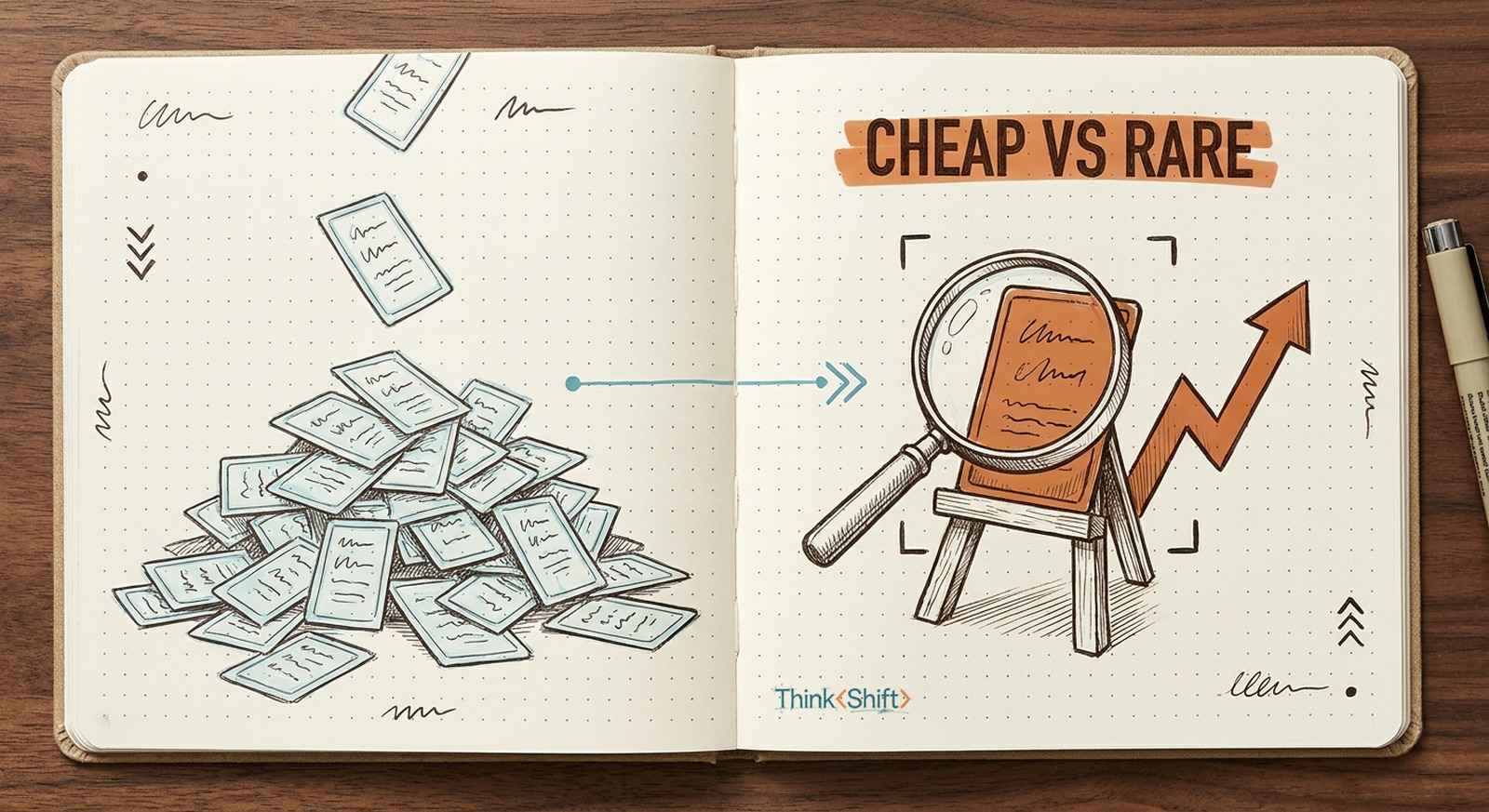
The move Before you read AI's answer, write your own one-line call, then compare. That's the rep that compounds judgment.
The short version: AI is fluid intelligence, raw horsepower, and it's now near-free on demand. Its price just cratered, but the same flood reprices whatever it can't make. AI hands you ten fluent options and no idea which one is right. That call is judgment, and it just got scarce. The trap is racing the machine on output. The move is compounding judgment, with a rep the normal way of using AI skips.
For most of your career the edge was simple: you could do the work well and fast.
AI just made "well and fast" something anyone can buy by the yard. So it's fair to wonder what's left that's actually yours.
The reflex that makes it worse
The instinct is to keep up. Another tool, another course, another folder of prompts to save. You watch someone with half your experience turn around in an hour what used to take you a day. So you press harder, clocking yourself by output now, by how much you can push out before lunch. It feels like staying in the game. It's a race you entered on the machine's terms, on the one thing it will always beat you at.
Psychologists split intelligence into two categories
One is raw processing, the speed to solve a fresh problem cold. Call it horsepower. The other is the library of experience you've built from every problem you've already worked, plus knowing which page to open. Call it judgment.
AI has horsepower to burn. Its price just cratered. Another draft, another analysis, another ten options, near-free and on demand all day. When something once scarce turns cheap and endless, it stops being where your value lives. But that same flood does the opposite to whatever it can't do. AI will hand you ten fluent options in seconds and no idea which one is right. That call is judgment. And it just got scarce.
When answers get cheap, judgment gains value.
The move: decide before you look
So the thing to grow isn't your output. It's your judgment. But judgment only compounds when you use it. You form a view, then find out if you were right. The everyday way of using AI skips both steps. You ask, it answers, you ship. You never find out if you'd have been right.
One habit changes that. Before you look at what the AI gives you, write down your own view first, one line. Then hand it the task and your line together. Let it push back.
Here's the task, plus the view I put down before reading yours: [paste the task + your line]

- Give me your own recommendation and the single reason for it.
- Where does it differ from mine? Make the case against it.
- The strongest option neither of us picked.
- How sure are you, 1 to 10?
Filled in, it looks like this:
Here's the task, plus the view I put down before reading yours: The client wants to cut the pilot from eight weeks to four. My call: push back. Four weeks isn't enough to see if the workflow holds under real volume.

- Give me your own recommendation and the single reason for it.
- Where does it differ from mine? Make the case against it.
- The strongest option neither of us picked.
- How sure are you, 1 to 10?
Something like:
My recommendation: Accept four weeks, but redefine success for the shorter window. Pushing back risks losing the pilot entirely.
Where it differs: You're protecting data quality. I'm protecting the relationship.
Strongest option neither of us picked: Four weeks with a checkpoint at week two and a trigger to extend if volume hasn't hit threshold.
Confidence: 6/10.
See where your call held up and where it missed? That feedback is how judgment grows, and it's the one thing ask-and-ship skips. The output was (almost) free anyway. This is you buying the part that isn't.
Where the freed hour goes
None of this is a case for staying slow or precious about doing it by hand. Let AI carry the doing; knowing your way around it is just the baseline now. That hands you an hour back. The real question is where it goes. Spend it out-typing the machine and you compound nothing. Spend it on the calls only you can make and it compounds for years.
When answers get cheap, judgment gains value.
Hand the machine the doing. Keep the deciding.