
Meeting Edge
The meeting prompt mistake that creates generic prep
"Help me prep for this meeting" collapses two opposite jobs into one prompt. Split them and you walk in sharper and leave with real commitments.
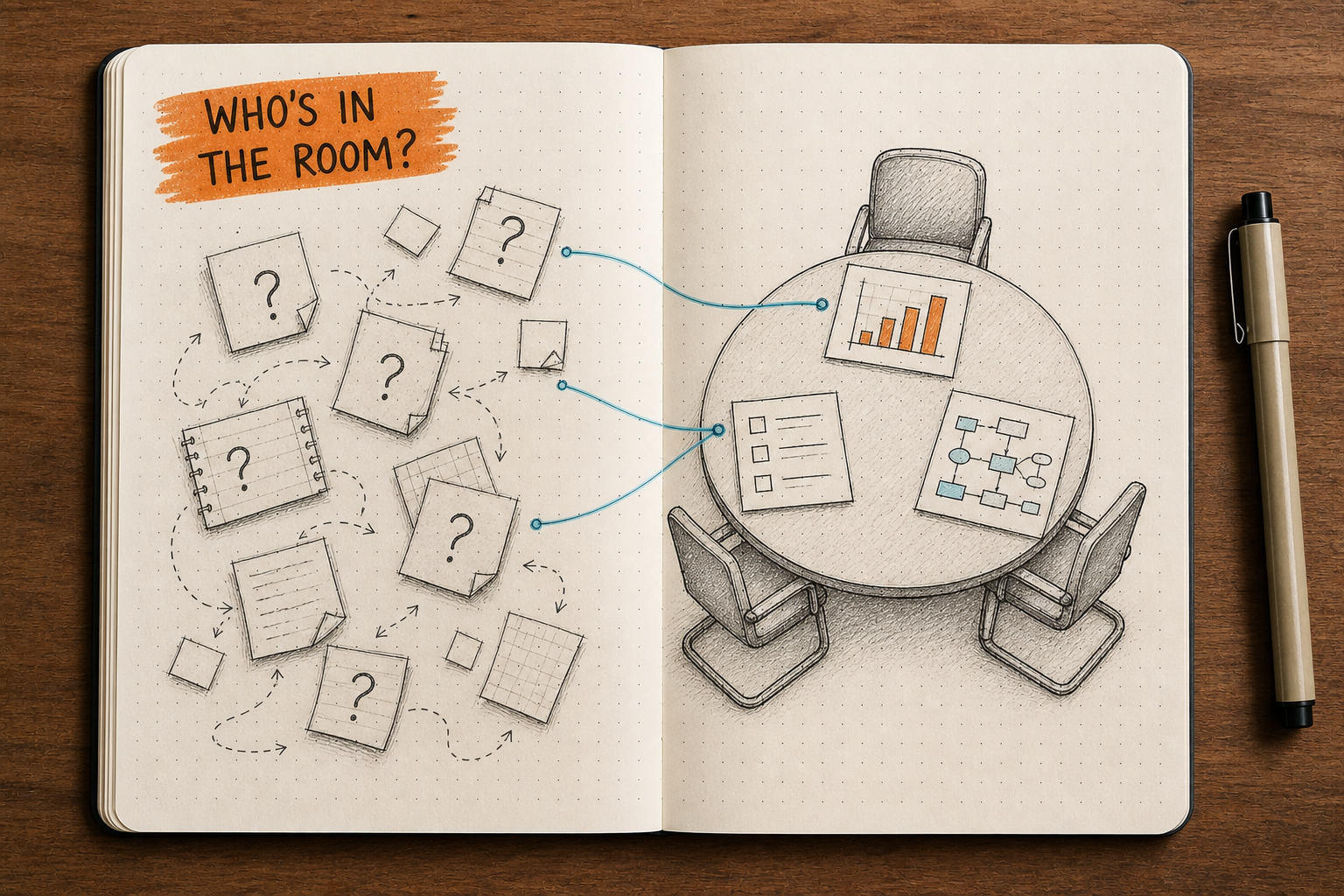
The move Before the meeting, ask AI what's unresolved, what question you're not seeing, and what risk hasn't been named. After the meeting, ask for decisions, owners, and deadlines. Don't use one prompt for both.
The short version: "Help me prep for this meeting" treats two opposite cognitive jobs as one and gives you organized talking points that don't surface anything new. Split the work: expand before the call, compress after it.
It's 1:45. Your weekly client check-in starts in fifteen minutes. You paste last week's notes and the agenda into AI: "Help me prep for this meeting." It hands back talking points, open items, a reminder about the delayed rollout. Looks ready. You walk in.
Forty minutes later the same two issues got recycled, nobody named who owns the fix, and "let's circle back" is doing the work of a decision.
The brief was organized. It wasn't sharp, and the reason is baked into the prompt.
Two jobs, one prompt, neither done well
"Help me prep" treats meeting prep as one job. It's two, and they run in opposite directions. Before the call, you need expansion: what question haven't you thought to ask, what thread from two weeks ago went quiet, what risk is nobody naming. After the call, you need compression: what was decided, who owns it, by when.
One prompt tries to do both and lands in the middle. You get a tidy set of talking points that look like prep but don't surface anything you didn't already know.
Expand before the call. Compress after it.
Before the call: expand
Give AI your recent meeting notes and today's agenda:
Here are the notes from my last two meetings with [client/team]:
[paste notes]

And here's today's agenda:
[paste agenda]

What's unresolved from previous meetings that hasn't been named yet?
What question should I raise that I'm not seeing?
What risk hasn't come up?
Filled in, it looks like this:
Here are the notes from my last two meetings with Ridgewell Partners:

Aug 12: Reviewed Q3 onboarding metrics. Sarah flagged they're short-staffed
for implementation. We offered to push Phase 2 by two weeks. No decision on
the revised scope doc. They asked about data migration timing. I said I'd
check.

Aug 19: Phase 1 adoption numbers strong. Client raised two unresolved support
tickets. We said we'd prioritize. Sarah briefly mentioned Phase 3 but no
details.

Today's agenda: Q3 progress, open support items, Phase 2 kickoff date.

What's unresolved from previous meetings that hasn't been named yet?
What question should I raise that I'm not seeing?
What risk hasn't come up?
It surfaces the gaps you'd walk in missing:
Unresolved: The revised scope doc from Aug 12 still needs a decision. If Phase 2 kicks off without it, you're building against a draft scope. You also told them you'd check on data migration timing. No follow-up appears in the Aug 19 notes.
Question you're not seeing: Phase 3 came up briefly with no structure. If it surfaces today, do you have a position? Whether you want to encourage or defer it changes how you respond.
Risk: They're short-staffed for implementation. If Phase 2 timing depends on their team being ready, the two-week push may not be enough.
After the call: compress
Paste your raw notes and ask for structure:
Here are my raw notes from today's meeting:
[paste notes]

For every topic discussed, give me:
1. What was decided
2. Who owns the next step
3. The deadline, or flag that none was set

If something was discussed but nothing was decided, say that.
Filled in:
Here are my raw notes from today's meeting with Ridgewell Partners:

Q3 numbers reviewed, Sarah happy with adoption, wants retention data next
month. Support tickets: one resolved, SSO login issue still open. Phase 2:
start Sept 8 pending revised scope doc, I need to send by Friday. Phase 3:
they want a rough scope by end of month, no pricing decision. Data migration:
confirmed 4-week timeline, they're OK with it.
It pins down what was actually decided:
1. Q3 metrics: Include retention in next review. Owner: you. Deadline: next meeting.
2. Support tickets: SSO login still open. Owner: your support team. Deadline: none set. Flag this.
3. Phase 2 kickoff: September 8, pending scope doc. Owner: you (send scope doc by Friday).
4. Phase 3: No decision yet. They want a rough scope. Owner: you. Deadline: end of month. Note: no pricing agreement.
5. Data migration: 4-week timeline accepted. Owner: engineering (confirm they're tracking).
Why this helps
The before prompt catches what you'd walk in missing. The after prompt catches what would've slipped out as "let's follow up." Together they turn the recurring meeting into a ratchet: each session moves forward because the last one's loose ends are visible.
The catch
AI doesn't know what happened in the room. It can't hear the pause when you named the timeline or read whether "sounds good" meant it. These prompts handle the paper trail. The read of the room stays yours.
Try it this week: Pick one recurring meeting. Before it, paste the last notes and ask what's unresolved. After it, paste your raw notes and ask for decisions, owners, and deadlines. You'll catch at least one commitment that would've drifted.