Meeting Edge
The pre-mortem prompt
Don't ask AI whether the plan is good. Tell it the plan already failed, and ask why.
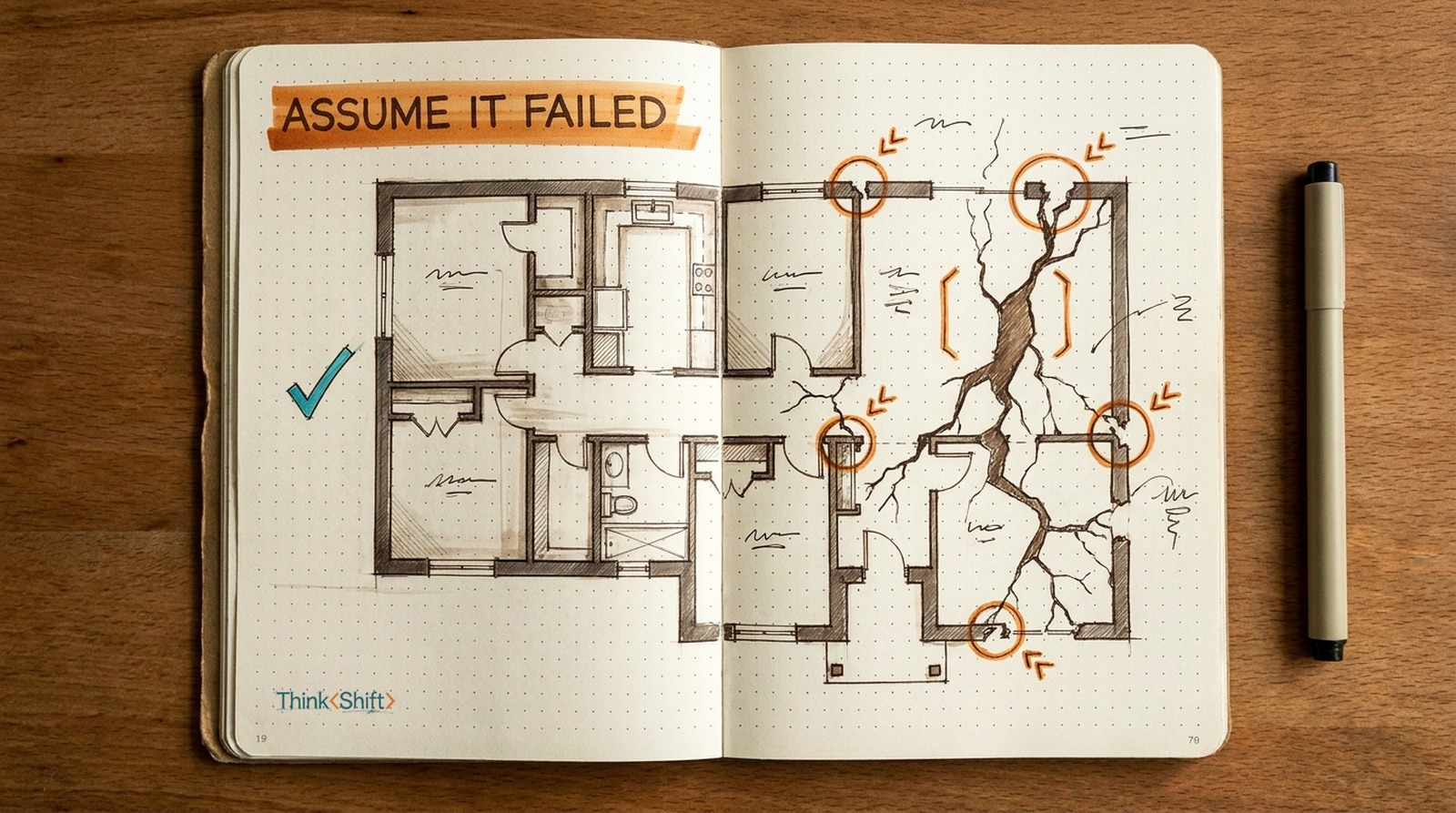
The move Don't ask AI if your plan is good. Tell it the plan already failed and ask why, and it surfaces the risks a gentle verdict buries.
The short version: Ask AI whether your plan holds up and it grades gently, handing you reassurance right where you needed a stress test. So don't ask for a verdict. Tell it the plan already failed and make it explain the three most likely reasons, and it surfaces the risks the friendly version buries.
Why AI goes easy on your plan
Nobody likes being the person who says the plan won't work. It turns out AI doesn't either. Ask it whether your plan holds up and it grades gently, mirroring your confidence back at you, so what you get is reassurance right where you actually needed a stress test.
Flip the question
So flip the question. Don't ask whether the plan is good. Tell it the plan already failed, and make it explain why:
It's three months from now and this plan failed badly. Here's the plan: [paste it].

Walk me through the 3 most likely reasons it fell apart, most probable first. Be specific about what we missed.
What comes back
Assuming failure changes what comes back. Instead of "looks good," you get the risks that were hiding: the dependency you glossed over, the stakeholder nobody looped in, the timeline that never had slack. Same AI, opposite question, and now it's working for you instead of flattering you.
Run it while it still matters
Run it while the plan can still change, not after it ships. A failure you can still prevent is worth more than one you get to explain.