Signal
The useful AI upgrade may be a checklist, not a better model
When an AI draft reads well but the reasoning is thin, re-prompting won't fix it. Four questions will.
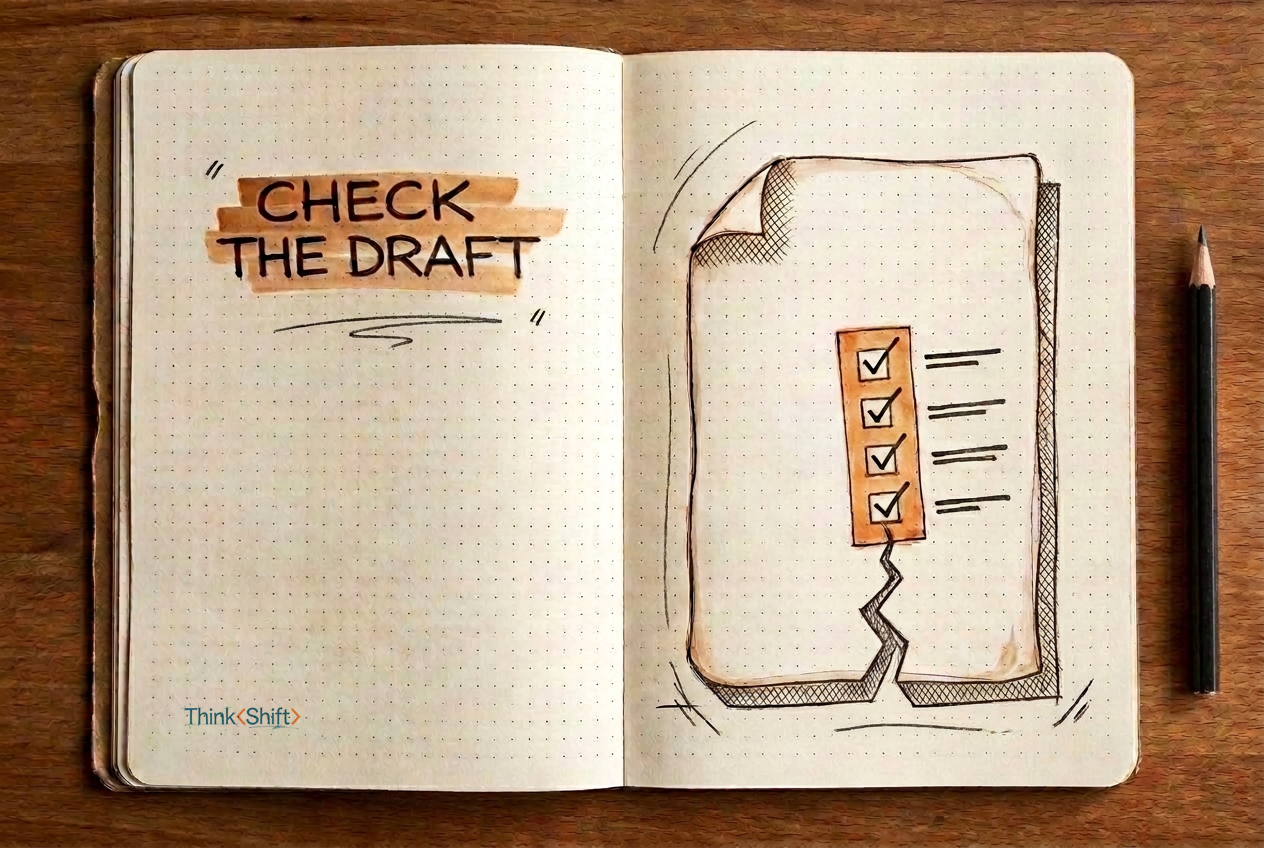
The move Before you send an AI-drafted recommendation, run four questions: claim, evidence, assumption, counterpoint. If the claim falls apart at evidence, no model upgrade fixes that email.
The short version: When an AI draft reads well but the reasoning is thin, most people re-prompt or switch models. That gives you a more polished version of the same unsupported claim. The fix is thirty seconds of checking, not a better model.
You used AI to draft a recommendation email from your meeting notes. It's structured, it moves, it sounds like you on a good day.
Then you notice the second paragraph says the client's current approach "consistently underperforms." It reads well. But there's no number behind it. The draft is confident. The reasoning is thin.
Most people re-prompt or try a different model. That gives you a more polished version of the same unsupported claim.
The draft that sounds ready and the draft that is ready are thirty seconds apart.
The four-question check
Before you send an AI-drafted recommendation, run four questions:
- Claim. What exactly is this saying? (Name it in one line.)
- Evidence. What supports it? (If the draft cites nothing, you have nothing.)
- Assumption. What has to be true for this to hold?
- Counterpoint. What would the skeptic say first?
If the claim falls apart at question two, no model upgrade fixes that email. You find the evidence or you soften the claim. That call is yours.
What to skip
The "which model writes better" thread. The gap between a checked draft and an unchecked one is wider than the gap between any two models.