Work IQ
The mistake that sounds right
The obvious AI mistakes are the safe ones. It's the plausible errors that get past you.
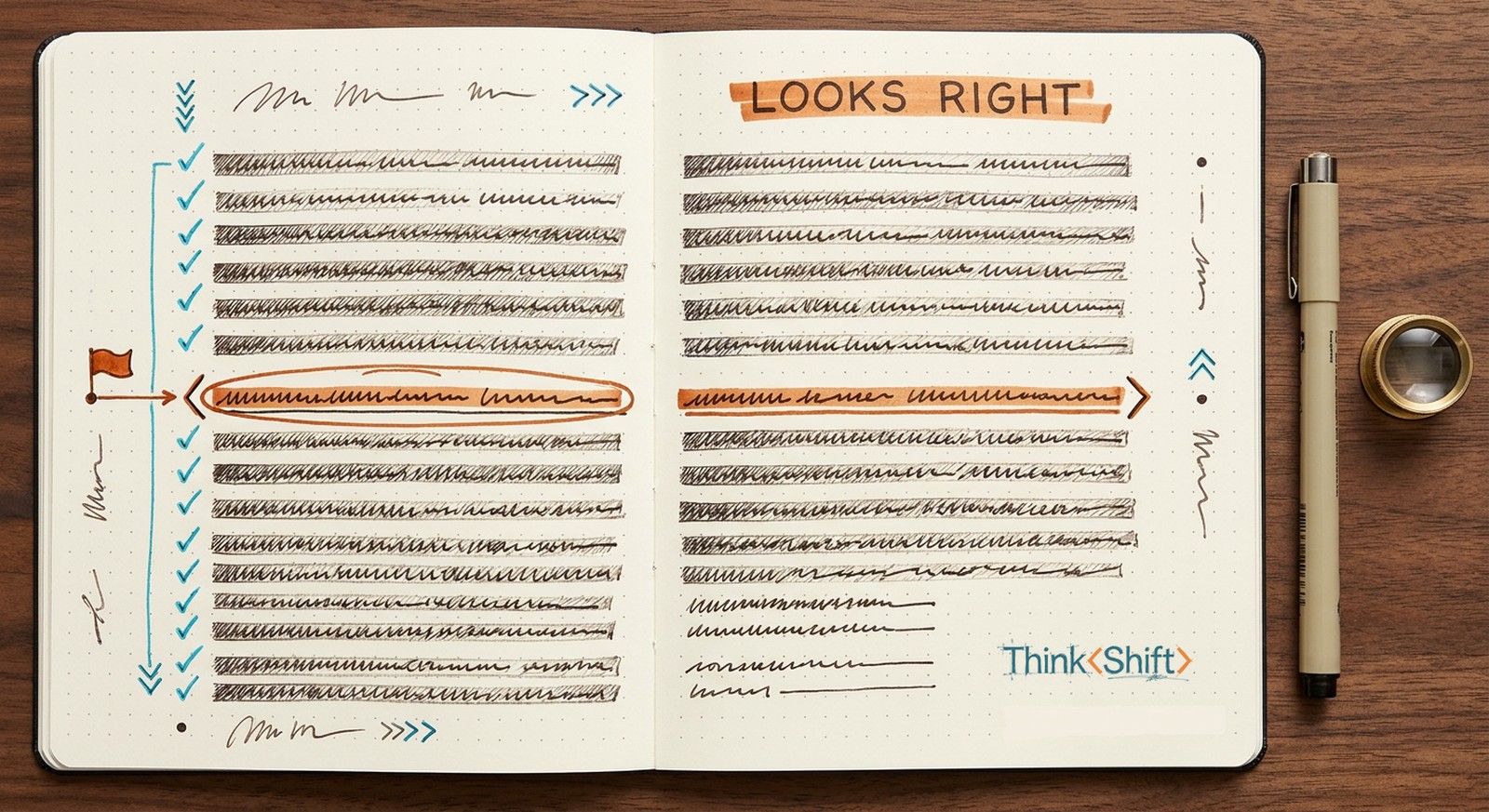
The move Review AI output by consequence, not plausibility: check the one load-bearing claim against its source.
The short version: The AI errors that hurt you aren't the obvious fabrications, because you catch those. They're the plausible ones: confident, well-written, wrong only on the single exception your decision rests on. Reviewing output for whether it "sounds right" is useless, because sounding right is exactly what the tool is built to do. The move is to review by consequence, force a checkable source line for the claim that matters, and start there.
The scene
Forty pages of vendor contract, and your client call was in an hour. So you pasted the whole thing into AI and asked for the risks. What came back looked great: six clean bullets, calm and organized, the kind you'd forward without touching. You skimmed it. It matched what you expected, so you moved on.
Two of those bullets were the whole reason to worry. AI had read the liability cap, called it "standard market terms," and kept going. It wasn't standard. It was the one clause that would cost your client if the deal ever went sideways.
The trap
Here's the uncomfortable part. You didn't miss it because you were careless. You missed it because it read right.
When AI invents something obviously fake, a court case that doesn't exist, a function that was never in the library, you catch it. It fails the smell test, you check, no harm done. The fabrication is the safe error.
The dangerous error is the plausible one. Confident, in the right register, correct on the ninety percent and wrong on the ten that matter. It trips no alarm, because it's built out of the same smooth, finished-sounding language as everything it got right. Your eye is trained to catch what looks wrong. Its mistakes are built to look right.
The shift
So the instinct is to read the output and judge whether it sounds solid. That's the exact filter the mistake already walked through.
The shift is to stop reviewing for plausibility and start reviewing for consequence. You don't need to verify all six bullets. You need the one or two your decision actually rests on, and you check those against the source, precisely because they read as fine as the rest.
The error that costs you isn't the one that looks wrong. It's the one that looks done.
The move
So next time, don't ask AI to summarize and trust the summary. In whatever AI you've got open, make it show you where it's load-bearing and hand you something you can check:
[paste the document]

Before I act on this, I need to know where it breaks.

1. List the 3 claims my decision most depends on.
2. For each, quote the exact line from the document it rests on.
3. Flag the one claim that, if it's wrong, most changes what I should do.

If you can't quote a real source line for a claim, say so plainly.
Same contract, run this way, hands back something you can actually check:
1. Termination: either side can exit on 30 days' notice.
Source: "...may terminate for convenience upon thirty (30) days written notice." Checks out, low stakes.
2. Liability cap: described as standard.
Source: "...liability shall not exceed the fees paid in the prior 3 months." Not standard.
3. IP: deliverables belong to the client on payment.
Source: "...all deliverables shall vest in Client upon payment." Checks out.
Check #2 first. If "standard" is wrong, your client's recovery is capped at roughly one quarter's fees. That's the claim your decision rests on.
Here's what that buys you. Not a verdict to trust, but three claims ranked by what they'd cost you, each pinned to a source line you can verify. You start with the one it flagged. You're not proofreading forty pages for tone, you're checking a single clause against the contract, the one your client has to live with. And if AI can't produce a source line for a claim, you've found the fabrication: the confident sentence with nothing under it.
The close
The fluent summary was never the risk. The risk was trusting fluency as proof of being right, when fluency is the thing it hands out whether or not it's right. The ones who get caught out aren't the ones who checked and missed. They're the ones who read something that sounded finished and called it checked.
What stays yours
One line to keep. AI can point you at the load-bearing claim and quote the source, but it can't tell you whether a quarter's fees is a risk this client can live with. Knowing which risk actually matters is the read you were hired for. That part stays yours.